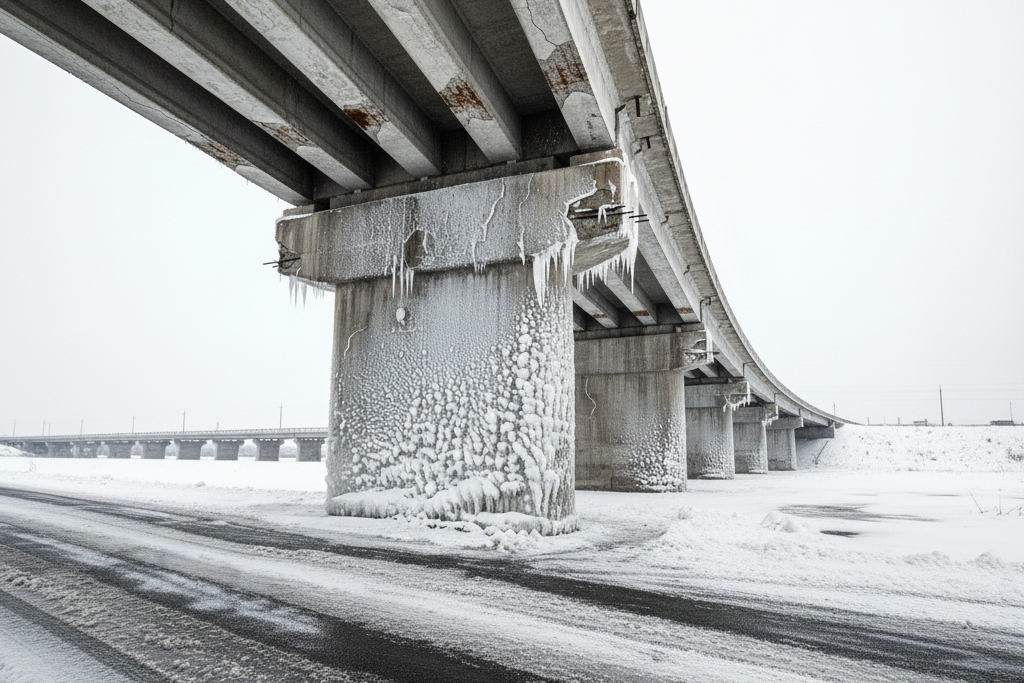
Winter is unforgiving on concrete.
Freeze–thaw cycles. Deicing salts. Moisture intrusion.
They don’t pause when temperatures drop. In fact, deterioration accelerates.
Time is the most critical variable in concrete performance.
Every hour matters. Every delay allows damage to progress deeper into the structure.
Cold weather concrete protection is not optional in northern climates, it is essential for preserving infrastructure and controlling lifecycle costs.
Let’s break down how to repair and protect concrete assets before winter damage escalates beyond control.
Concrete deterioration in cold weather is progressive and cumulative.
When moisture enters the pore network and freezes, it expands. Repeated freeze–thaw cycles create:
At the same time, chloride ion diffusion from deicing salts introduces another layer of risk.
Calcium chloride (CaCl₂), commonly used to melt ice, does not disappear once the snow clears. Chlorides penetrate the concrete matrix and react with calcium hydroxide to form calcium oxychloride — an expansive compound that causes cracking and internal disruption year-round.
The damage does not wait for spring.
It builds beneath the surface.
Once embedded steel is exposed to chlorides, corrosion begins — and corrosion expands, placing blasting pressure on the concrete cover. Cracking spreads. Spalling accelerates. Costs escalate.
Many conventional repair materials struggle — or fail — in freezing conditions. That delay is costly.
Cold weather concrete repair solutions must perform when others cannot.
CreteCare Pro VOH® is engineered specifically for repairing concrete in freezing temperatures. With a liquid activator capable of performing down to −10°F (−23°C), repairs can move forward without seasonal shutdowns.
This system delivers:
Instead of waiting for warmer weather — while deterioration accelerates — infrastructure teams can act immediately.
When damage is time-sensitive, repair materials must respond with equal urgency.
Stopping active deterioration in winter prevents minor defects from becoming major structural failures by spring.
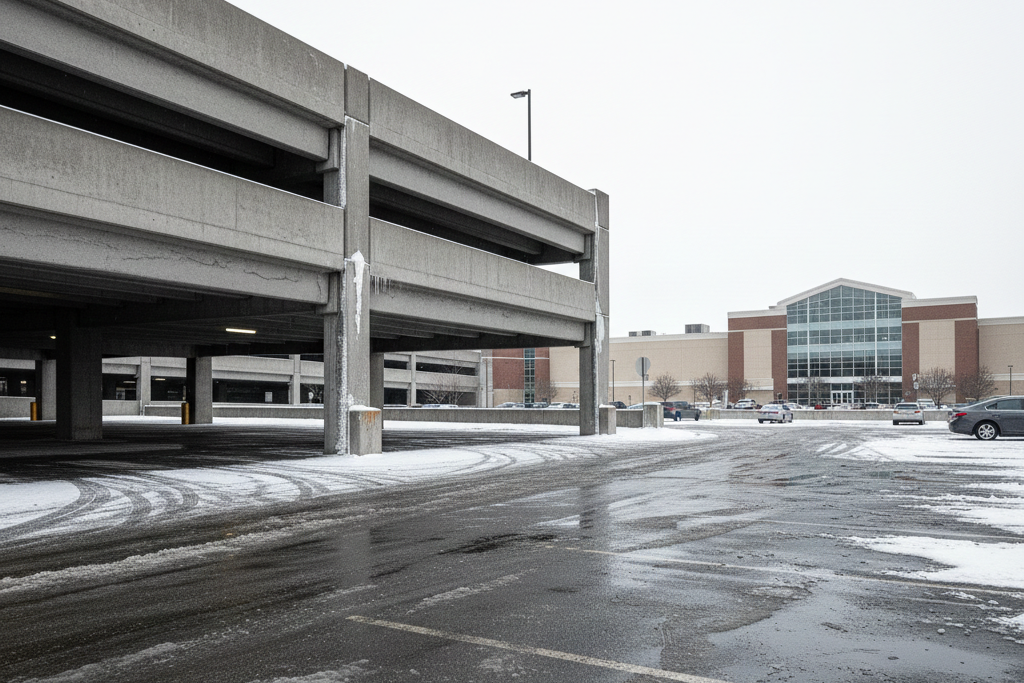
Repair alone is not enough.
Once the surface is restored, long-term protection must follow.
CreteCare Pro® provides an internal concrete protection barrier that works at the pore level — not as a surface coating, but within the concrete matrix itself.
CreteCare Pro penetrates deeply and fills the pore structure, blocking moisture and chlorides before they can diffuse inward.
Unlike conventional penetrating sealers that solidify and eventually crack:
Even if the concrete experiences microcracking, protection continues.
The result? Long-term concrete durability enhancement integrated into the structure itself.
Protection is not temporary.
It lives inside the concrete.
Chloride intrusion is one of the leading causes of premature deterioration in:
By protecting embedded steel from chlorides, CreteCare Pro helps prevent corrosion before it initiates.
It also reduces the conditions necessary for calcium oxychloride formation, limiting expansive internal reactions triggered by deicing chemicals.
When moisture and salts are stopped at the pore network:
Durability is preserved where it matters most — inside the concrete, not just on the surface.
.png)
The most effective strategy combines:
By repairing through winter and integrating internal protection, asset owners gain control over infrastructure lifecycle performance.
The benefits are measurable:
Waiting increases risk.
Acting early preserves value.
Winter Is Harsh. Delay Is Worse.
Cold climates will always challenge infrastructure.
But winter does not have to stop repairs.
And it does not have to dictate the pace of deterioration.
CreteCare Pro® and CreteCare Pro VOH® allow you to:
When every minute matters, the ability to act without delay makes the difference between reacting to damage — and controlling it.
Ready to protect your assets before winter damage accelerates?
Schedule a Concrete Asset Assessment today.
Control deterioration: don’t let winter control you.
Content, Marketing & Web Design

Content, Marketing & Web Design

